CheckIfReal
- 3.2
- Rating
- 50.00K
- Installs
- Free
- Price

 Analysis by App-foxy
Buying a product with an Authentic Vision security label can leave you with one practical question: is the item genuine? CheckIfReal is built for that exact moment. It is a free Android app from Authentic Vision GmbH that lets you use the label on a supported product as the starting point for an authenticity check. I found its purpose refreshingly narrow: it is not a general barcode reader, shopping tool, or product database, but a focused way to interact with a security label.
That focus makes the app easy to understand, although it also determines when it is useful. You need to be holding a product that carries Authentic Vision’s label, and the check depends on being able to work with that label successfully. If you are comparing ordinary supermarket items, checking a serial number from a different system, or researching a product before purchase, this is not the right kind of app. It is most valuable at the handoff between seller and buyer, when the physical item is already in front of you and reassurance matters.
From a sealed product to a clearer buying decision
I’d use this section to look beyond the act of scanning and consider how the check fits into a real purchase: what it can clarify, and what still calls for my own judgement. A useful next step is to think about the moment when a quick result matters most—before a sealed item changes hands—so the following section can focus on making that decision calmly and with the product in view.
You May Also Like

 Blood Strike: 2.5 Anniversary
Blood Strike’s Loadouts Turn Every Drop Into a Tactical Gamble
A close look at Blood Strike’s custom loadouts: how fast access to signature weapons reshapes its battle royale rhythm, rewards preparation, and narrows the gap between fights.

 Pandora - Music & Podcasts
Pandora’s Music Is Easy to Start, but Harder to Recover
Pandora’s strength is its low-effort path from a seed to a station. Its weak spot is how much confidence it asks you to place in connection, setup, and quiet recovery.

 8 Ball Pool
 Is Built on Rivalries, Rematches, and Routine
A close look at the rivalries, rematches, shared routines, and unanswered safety questions that turn a quick pool match into a persistent mobile community.

 Samsung Music
’s Quiet Strength Is Playing What You Already Own
Its reach comes less from spectacle than from dependable access to a personal library. That simplicity is both the app’s strongest retention engine and its ceiling.

 AccuWeather: Weather Radar
AccuWeather Review: A Quick, Clear Forecast for Everyday Decisions
For everyday plans, the best forecast is the one you can understand quickly. AccuWeather makes rain timing, radar, and local conditions easy to act on, with a few trade-offs.

 Hill Climb Racing
Why Hill Climb Racing Still Turns Crashes Into One More Run
A tiny car, a bumpy hill and one more upgrade: Hill Climb Racing keeps resurfacing because its simple chaos makes every near-miss feel personal.
More From Our News Desk
View All News


The starting condition matters more than the app itself
My first recommendation is to begin with the product, not the application. Look for the Authentic Vision security label and make sure it is visible and accessible. This sounds obvious, but it is the detail that separates a useful check from a frustrating one. Installing CheckIfReal without a compatible label does not turn it into a universal authenticity scanner.
This is also where the app differs from familiar alternatives. A normal barcode reader usually identifies a product, opens a web search, or displays information connected to a retail code. That can help with price comparisons or basic product lookup, but it does not automatically answer the same authenticity question. CheckIfReal is designed around the security label itself, so its value comes from the label’s role in the verification process rather than from a broad catalogue of items.
I would use it when receiving a high-value item from a distributor, opening a product bought through an unfamiliar seller, or checking stock before passing it to a customer. In each case, the physical label is the bridge between the object and the digital check. The app is not replacing sensible buying habits; it adds a verification step to them.
A practical scan workflow
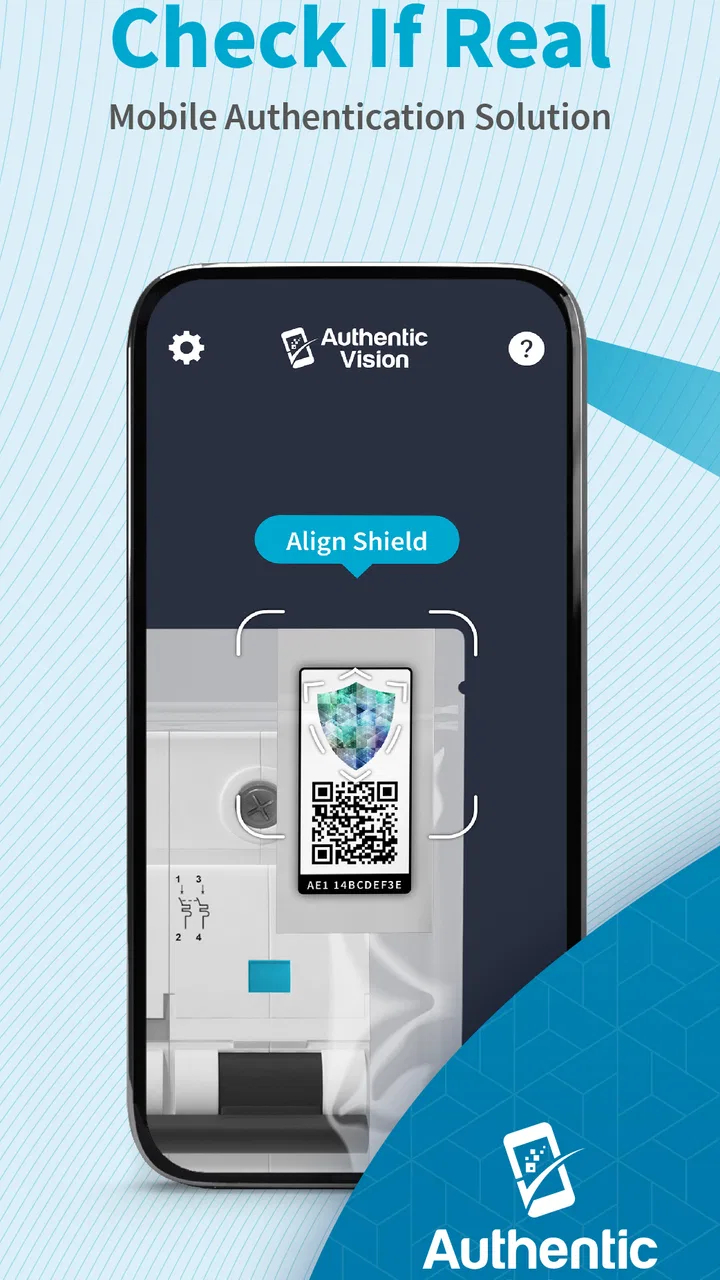
Once the application is installed, the workflow is intentionally direct. Open CheckIfReal, follow its on-screen scanning guidance, and position the security label so the phone can read it. Good lighting and a steady hand are simple but important. A reflective package, a folded label, or a camera held too far away can create friction that has nothing to do with the product’s authenticity.
I would avoid rushing this step in a shop aisle. Hold the package still, keep the label within the camera’s view, and give the app a clean opportunity to recognize it. If the first attempt does not work, changing the angle slightly is more useful than repeatedly tapping the screen. The goal is to present the label clearly, not to force the app to respond.
That small change in mindset is one of the less obvious advantages of a dedicated tool. With a general scanner, an unsuccessful read can be ambiguous: perhaps the barcode is damaged, perhaps the product is not in the database, or perhaps the application is simply limited. Here, the label is the intended input, so I know what to adjust first. I would inspect the label, improve the view, and try again before drawing conclusions.
The phone itself becomes part of the process. A camera that struggles in dim conditions, a screen covered in glare, or a product squeezed into a crowded box can make the check less comfortable. For a personal purchase this may be a minor inconvenience. For someone checking many items in a row, it becomes a workflow issue. I would set up a bright, uncluttered spot rather than treating the app as something to use casually while walking between shelves.
What the handoff looks like in real life
The most useful way to understand CheckIfReal is as a handoff tool. A manufacturer or supplier places the security label on the product. A retailer, warehouse worker, buyer, or end customer then uses the app to check that item. The application sits between the physical package and the person who needs confidence about it.
Imagine receiving a shipment for a small business. Instead of checking only the outer carton or trusting the paperwork, you take one product from the delivery, locate its Authentic Vision label, and run the check before putting the stock on a shelf. If the result is reassuring, you can continue your receiving process with more confidence. If the process raises a concern or cannot be completed, you have a reason to pause that item and inspect the purchase through the seller or supplier rather than distributing it immediately.
That workflow is more useful when the person scanning is not the person who originally bought the goods. A warehouse employee may be checking on behalf of a manager. A retailer may be checking stock received from a wholesaler. A family member may be checking an item purchased for someone else. In all of these cases, the app gives the next person in the chain a practical action instead of asking them to rely entirely on the previous person’s assurance.
There is a trade-off, though. The app can support the handoff, but it does not remove the need for human judgement. I would still compare the item with the order, examine suspicious packaging, and keep the seller’s details if the purchase is important. A digital check is one part of a chain of evidence, not a substitute for every other part.
Understanding the outcome without overreading it
The useful outcome is not simply that the app opened or recognized something. The point is whether the product’s security label can provide a trustworthy authenticity indication through the CheckIfReal process. I would treat a successful, clear result as a reason for greater confidence in that item, then continue with the purchase or receiving process.
If the result is not reassuring, I would stop and separate the product from items I already consider acceptable. I would not immediately assume that every product from the seller is affected, but I would document what happened and ask the seller or supplier for an explanation. This is especially important in a business setting, where mixing a questionable item back into approved stock can make later investigation harder.
A failed attempt also deserves careful interpretation. A label may be difficult to scan because of lighting, positioning, surface reflections, or physical damage. I would repeat the check under better conditions before treating the outcome as a final verdict. That is a concrete habit worth adopting: separate a scanning problem from an authenticity concern. The app helps with the check, but the user still has to distinguish technical friction from a meaningful warning.
For an everyday buyer, the result is most valuable when it changes a decision. If I am about to accept an expensive product, a clear check can make me more comfortable completing the handoff. If the process leaves me uneasy, I would rather delay acceptance than rely on pressure from a seller who wants a quick transaction. The app’s practical strength is that it gives me a reason to pause and inspect instead of making the decision purely on instinct.
Where the flow breaks down
The largest limitation is its narrow scope. CheckIfReal is not a broad product-authentication service for every brand or label. Its usefulness begins only when the product uses an Authentic Vision security label. That makes it more purposeful than a generic scanner, but it also means I would not install it as my only tool for checking products from unrelated systems.
The second weakness is dependence on the physical label. If the label is hidden beneath packaging, scratched, folded, badly positioned, or difficult to access without opening the item, the ideal quick check becomes less convenient. This matters when a seller expects the product to remain sealed. I would clarify whether the label can be checked without damaging the packaging before promising a customer that verification will be immediate.
There is also a human-factor problem. People may assume that seeing an app result means they no longer need to look at the product itself. I think that is the wrong way to use it. Packaging quality, seller behaviour, order details, and the condition of the item still matter. The app is strongest as a targeted confirmation step, not as permission to ignore everything around it.
Compared with a manufacturer’s own support channel, CheckIfReal is faster for the initial check and less dependent on writing messages or waiting for an answer. Compared with a general barcode scanner, it is more relevant to the authenticity question when its label is present. Compared with manual inspection alone, it adds a digital checkpoint. None of those alternatives disappears completely; the best choice depends on whether I need a quick label-based check, broader product information, or direct help with a disputed purchase.
Who will get the most from it
I see the clearest value for buyers who regularly handle products carrying Authentic Vision labels, small retailers receiving stock, distributors checking items during intake, and customers who want an extra step before accepting a purchase. It can also be useful for someone who does not know the seller well but can inspect the product directly. In those situations, the app turns a vague concern into a repeatable action.
It is less suitable for someone looking for product reviews, price tracking, inventory management, or a universal scanner. If your usual question is “where can I buy this?” rather than “can I verify this labelled item?”, another app category will serve you better. I would also skip it if you rarely encounter products using the relevant security label, because the narrow purpose may not justify keeping a dedicated tool on your phone.
The age rating is Everyone, which fits the straightforward nature of the task. There is no purchase cost to create a barrier for a quick check, and the application has been available since March 17, 2014. Its current version is 8.5.5 and it requires Android 7.0 or newer, so compatibility is worth checking before a planned receiving session rather than discovering the issue at the counter.
What its adoption and rating suggest
CheckIfReal sits in the Libraries & Demo area of the app world, although I would think of it more as a focused verification utility than as a conventional library or demonstration app. It has passed the point of being obscure, with over fifty thousand installs, but its average rating is 3.2 from around one hundred sixty ratings. I read that combination as a sign to keep expectations practical: the concept is useful, yet the experience may depend heavily on the label, phone camera, packaging, and situation.
The rating does not make me dismiss the app, because a tool like this is judged in difficult real-world conditions. Someone trying to scan a reflective label in poor light may have a very different experience from someone using it carefully at a receiving desk. Still, I would test the workflow with a legitimate labelled product before relying on it for a large shipment or an urgent customer handoff.
The developer, Authentic Vision GmbH, is directly connected to the security-label system the app is intended to work with. That makes the application’s narrow design understandable. It is not trying to become a shopping platform or a general-purpose scanner; it is a small piece of a product-verification process. For me, that is a strength when the use case matches, and a limitation when it does not.
Small habits that make the check more reliable
I would keep three habits when using it. First, scan before the final handoff whenever possible, not after the product has already been accepted and mixed with other goods. Second, record which physical item was checked if I am handling several similar packages, because a result is only useful when I can connect it to the right object. Third, if a scan fails, improve the physical conditions before escalating the issue: better light, a clear view, less glare, and a steady phone.
For a shop or warehouse, I would make the check part of intake rather than an improvised response to suspicion. One person can present the item, another can compare it with the order, and the final decision can be made before stock moves onward. That division of responsibility is more valuable than simply telling everyone to “scan it,” because it prevents a positive result from being attached to the wrong package or recorded without context.
For a personal purchase, I would use the app before leaving the meeting point if the seller allows it. If the label cannot be checked, the seller refuses a reasonable verification step, or the result is unclear, I would treat that as a reason to slow down. CheckIfReal cannot negotiate on my behalf, but it can improve the quality of the moment when I decide whether to proceed.
My final take on this focused verifier
I like CheckIfReal because it has a clear job and can fit naturally into a real product handoff. It is free, simple in concept, and more relevant than a normal barcode reader when an Authentic Vision security label is present. The strongest use is not casual browsing; it is a deliberate check before accepting, selling, or distributing a physical item.
At the same time, I would not describe it as a universal answer to counterfeit concerns. Its usefulness depends on the right label being on the product, the label being scannable, and the user interpreting the outcome sensibly. Anyone expecting product research, broad brand coverage, or a replacement for seller support should choose a different tool or use additional methods alongside it.
My recommendation is therefore conditional but positive: install it if Authentic Vision-labelled products are part of your buying or receiving routine. Keep the phone steady, check the item before the handoff, and treat an unclear result as a prompt for further investigation rather than something to brush aside. Used that way, CheckIfReal earns its place as a practical, narrowly focused step between holding a product in your hands and deciding whether you are comfortable trusting it.
FAQs for CheckIfReal
01What is CheckIfReal and how does it work?
CheckIfReal is an app designed to help users verify the authenticity of products through QR code scanning. Once a QR code is scanned, the app accesses a database to confirm whether the product information matches the manufacturer’s records, providing users with a simple and effective way to avoid counterfeit goods.
02Is CheckIfReal available for both Android and iOS platforms?
Yes, CheckIfReal is available for download on both Android and iOS platforms. You can find it on the Google Play Store for Android devices and the Apple App Store for iOS devices, making it accessible to a wide range of users regardless of their smartphone preference.
03Is there a cost associated with using CheckIfReal?
CheckIfReal is free to download and use. However, some features may require in-app purchases or a subscription to unlock advanced capabilities, such as detailed product history or access to exclusive authentication tools. Be sure to check the app’s description for any potential costs before downloading.
04How reliable is the CheckIfReal app in detecting counterfeit products?
CheckIfReal relies on a comprehensive database that is regularly updated with information from manufacturers. While it is highly effective in many cases, the accuracy of the app depends on the availability and quality of data provided by the manufacturers. Always use the app in conjunction with other verification methods for the best results.
05What should I do if I find a counterfeit product using CheckIfReal?
If CheckIfReal identifies a product as counterfeit, it is recommended to contact the retailer or manufacturer immediately to report the issue. Additionally, refrain from purchasing or using the product and consider informing relevant consumer protection agencies to help prevent future occurrences.
Pros
- Easy to use interface for quick verification.
- Supports multiple product categories.
- Real-time scanning with fast results.
- User-friendly design enhances usability.
- Regular updates improve accuracy.
Cons
- Limited offline functionality.
- Requires camera permissions to scan.
- May not recognize niche products.
- Ads can be intrusive at times.
- Some features need internet access.

CheckIfReal
Gallery